Jazzyな雰囲気で、大きな古時計「おしゃれコード」の秘密
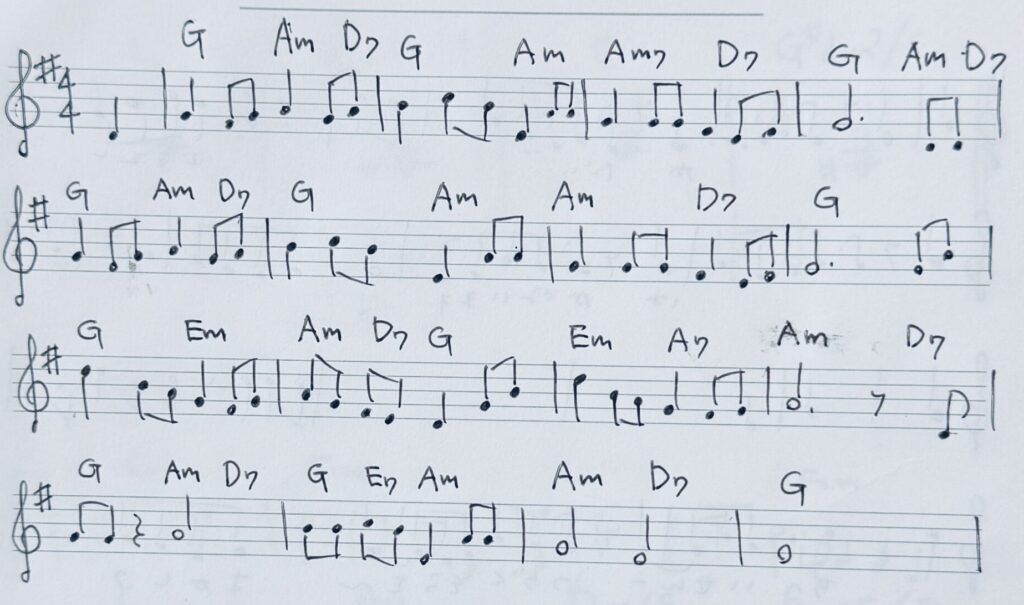
今回は「大きな古時計」のおしゃれコードのお話です。(楽譜と音源つき)
これを読んだ人が、少しでも、「こんなふうに弾いてみたい!」と思ってもらいたいし、なるべく簡単に、でもドラマティックに。それを両立するのが一番難しいことなんだけど、ぜひおしゃれなハーモニーを知ってもらえたらと思っています。
ダウンロード用の楽譜→大きな古時計
(音源は楽譜と多少違います)
初心者のピアノのテキストにはよく出てくる課題だけど、そこで弾いたっきりになっている人がほとんどですね。
1-4-5などの基本コードはもちろん知っておかなくてはいけないけど、それを大前提として、ちょっとだけjazzyな気分になれるようにアレンジしたので、ぜひ弾いてみてくださいね。
2−5進行
今回のポイントは2−5の進行と、ディミニッシュの二つ。
2-5は(例Am7-D7)、どこにでも使える万能コード進行です。
単純なメロディもこれで一気におしゃれ感アップします。
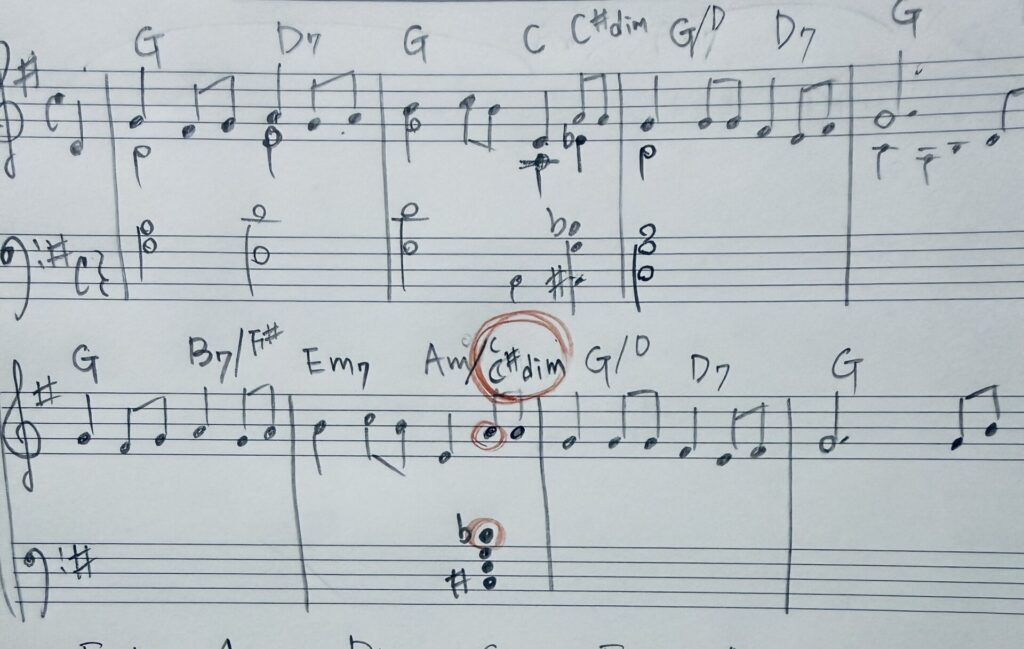
ディミニッシュ(減7)
ディミニッシュは経過音として意識。
ここにdimを入れましたよ、と存在感たっぷりにせず、あくまで自然に入れてみました。
もしご自身で、別の気に入ったコード進行があるなら、トライしてみてください。
(クラシックで出てくるディミニッシュの和音は目立つ存在だと思います。そう思いませんか?)
2-5(Am7-D7)は意外とどこでも使える
少し不自然でわざとらしいけど、試してみました。このような練習法もありです。
この例はあまりに不自然だけど、低音の並びや、転回形を工夫すると洗練されると思います。
正解は一つではないので、他に好きな和音があったら、試してみてください。
メロディーとコードが合う?合わない?
メロディにコードをつけていると、微妙な部分が出てきます。
例えば、この部分。メロディの「ラ」と、ディミニッシュの「♭シ」が、一瞬ぶつかっています。
ずっとクラシックを弾いてきた人にとって、ぶつかった音をポジティブに捉えるのは勇気のいることです。しかしジャズや現代音楽では、テンションという扱いになります。
以上、もっとピアノを自由に弾いてみたい人への内容でした。
質問、感想などは気軽に送ってください!
pianist &composer/Erika Asai
The Secret of the “Stylish” Chords in My Grandfather’s Clock
A Jazzy Approach
This article is about adding stylish chords to “My Grandfather’s Clock.”
(Sheet music and audio are included.)
I hope that after reading this, you’ll think,
“I’d like to try playing it this way.”
I try to keep things as simple as possible,
while still making the music feel dramatic.
Balancing those two is not easy, but I’d love for you to discover a new kind of harmony here.
Download the sheet music → 大きな古時計
(The audio is slightly different from the score.)
This song often appears in beginner piano books,
but many people play it once and never return to it.
Basic chords like I–IV–V are, of course, essential.
Taking those as a starting point, I added a small jazzy touch to the arrangement.
Please give it a try.
The 2–5 Progression
The main points of this arrangement are:
-
the 2–5 progression
-
the diminished chord
The 2–5 progression (for example, Am7–D7) is extremely versatile
and can be used almost anywhere.
Even a simple melody can sound more refined
just by using this progression.
Diminished Chords (dim / diminished seventh)
Here, the diminished chord is used as a passing chord.
Rather than making it stand out,
I placed it so that it blends naturally into the flow.
If you have other chord progressions you like,
feel free to experiment with them.
(In classical music, diminished chords often stand out strongly, don’t they?)
The 2–5 Progression Can Be Used Almost Anywhere
Some examples here may sound a bit forced or unnatural,
but trying this kind of exercise can be very helpful.
Even when it feels awkward,
adjusting the bass line or using inversions
can make the harmony sound much more polished.
There is no single correct answer,
so if you find chords you like, try them.
Do the Melody and Chords Match?
When you add chords to a melody,
you sometimes notice subtle clashes.
For example, in one spot,
the melody note “A” briefly clashes with “B♭” in the diminished chord.
For pianists with a classical background,
accepting these clashes can feel uncomfortable.
In jazz and contemporary music, however,
this kind of sound is treated as tension.
This article is for those
who want to play the piano more freely.
Thank you for reading!
pianist & composer / Erika Asai


コメント